
A New Paradigm in the Management of Pancreatic Diseases: Acute pancreatitis — Epidemic status and treatment strategies in China
 | Professor Chengwei TangDepartment of Gastroenterology |
Acute pancreatitis (AP) is one of the most common and critical diseases with an increasing incidence worldwide. Around 20% of the AP patients may develop severe acute pancreatitis (SAP), which has a high mortality rate of 30-40%. The high incidence of AP, fatality rate of SAP, and hospitalization cost bring heavy burden to the patients’ family, society, and the health-care system. At present, there are no specific and effective therapeutic agents for SAP.
Acinar cell damage prompts the release of damage-associated molecular patterns that activate pattern recognition receptors of the innate immune system, inducing an inflammatory cascade response that drives the development of SAP. Theoretically, the suppression of pro-inflammatory mediators, enhancement of anti-inflammatory ability, and modulation of the immune response would be beneficial for organ failure remission. The potential role of somatostatin or its analogs, such as octreotide, in the treatment of pancreatitis has been postulated because of their dual suppression of exocrine pancreatic secretions and release of pro-inflammatory cytokines. The reduction in circulatory IL-6, TNF-α, and CRP levels verified that exogenous supplementation with somatostatin/octreotide may act as a systemic anti-inflammatory agent. In addition, COX-2, an inducible cyclooxygenase that catalyzes the rate-limiting step in prostaglandin and thromboxane synthesis from free arachidonic acid, has been recognized as a crucial proinflammatory mediator in SAP. COX-2 inhibitors not only effectively reduce the occurrence of SAP but also significantly shorten the duration of organ failure through alleviating systemic inflammation. The clinical outcomes, including OF, local complications and 30-day mortality, are significantly improved by COX-2 inhibitors, and the duration of hospital stay and the cost during hospitalization are also reduced significantly. The easy regime of COX-2 inhibitors for SAP treatment has potential to change clinical practice.
Cough, Hoarseness, Globus: Modern Diagnosis and Management of Laryngopharyngeal Reflux Disease
 | Dr. Walter W. ChanDirector, Centre for Gastrointestinal Motility |
Distinguishing laryngopharyngeal symptoms from reflux disease
Laryngopharyngeal symptoms (LPS), such as chronic throat discomfort, cough, or voice changes, are increasingly recognised as a heterogeneous clinical entity. There is a critical distinction between LPS and laryngopharyngeal reflux disease (LPRD), with the latter requiring objective evidence linking symptoms to gastro-oesophageal reflux events. This distinction is important because LPS are poorly specific for reflux, with tools such as the Reflux Symptom Index showing only ~30% specificity.1 Mechanistically, reflux can affect the larynx directly, via compromised upper oesophageal sphincter function and aspiration of refluxate, or indirectly, through vagally mediated neural reflexes triggered by distal oesophageal reflux.2
Evaluation and management of LPS/LPRD are difficult because symptoms are highly non-specific and often unrelated to reflux. Typical throat complaints such as cough, hoarseness, throat clearing and excess phlegm lack diagnostic accuracy. Only about one-third of patients with LPS have objective reflux, while the rest present with non-reflux phenotypes.3 Oesophageal symptoms are frequently absent and laryngoscopic signs are unreliable, appearing in up to 87% of healthy individuals.4 No gold standard test exists because endoscopy may reveal gastroesophageal reflux disease features in some patients but cannot establish causality, and 24-hour pH-impedance monitoring is uncomfortable, variable and imperfect in symptom association.5,6 These limitations explain why empiric proton pump inhibitor (PPI) trials are ineffective. Randomised controlled trials have shown no benefit over placebo, supporting growing recommendation for upfront objective testing.7 Given the multifactorial origins of LPS, effective care requires an integrated, multidisciplinary approach that begins with a stepwise diagnostic program.
Building a structured pathway to diagnosis
This stepwise approach starts with laryngoscopy to exclude structural otolaryngologic conditions such as malignancy or vocal fold lesions, though its findings are non-specific and commonly seen in healthy individuals.8 Endoscopy may reveal gastro-oesophageal reflux disease–related changes such as oesophagitis or Barrett’s oesophagus though findings can be normal.9 High-resolution manometry often demonstrates oesophageal motility disorders in patients with LPS, supporting reflux as a possible contributor.10 Objective reflux monitoring is central to confirming LPRD, with 24-hour pH-impedance testing capturing both acid and non-acid reflux, while hypopharyngeal impedance–pH catheters can directly detect pharyngeal reflux events.11,12 Prolonged wireless pH monitoring helps account for day-to-day variability but only assesses acid reflux.12 Risk stratification tools are being development to better identify which patients with LPS should undergo upfront reflux testing.12 For patients with isolated LPS, upfront reflux testing is recommended before empiric PPI therapy. The COuGH RefluX score, for example, may help guide this process by improving diagnostic accuracy, targeting treatment to true LPRD and increasing cost-effectiveness.
Treatment guided by reflux evidence and brain-laryngeal factors
Treatment escalation should be reserved for patients with confirmed objective reflux, as antireflux therapy is only effective when LPS are truly reflux-related. In patients without objective reflux, brain–laryngeal disturbances play a central role in symptom generation.13 Rather than being dismissed as ‘non-reflux mechanisms’, these disturbances involve psychological distress, hypervigilance and symptom-specific anxiety, which perpetuate hypersensitivity and maladaptive behaviours such as chronic throat clearing.14 These insights have driven interest in targeted therapies. Laryngeal recalibration therapy combines cognitive retraining, voice therapy and mechanical desensitisation, which achieves similar response rates in patients with and without proven reflux.15 Cognitive behavioural therapy and neuromodulators such as gabapentin or tricyclic antidepressants are additional options, though potential side effects should be considered.16
Towards an integrated and tailored model of care
Ultimately, the management of LPS and LPRD requires a personalised and multidisciplinary approach. Collaboration among gastroenterologists, otolaryngologists, speech-language pathologists and psychologists is essential to disentangle reflux from non-reflux contributors and to deliver effective, patient-centred care.
References:
1. Salgado S, et al. Dis Esophagus 2022;36:doac041.
2. Chan WW, et al. Am J Gastroenterol 2025;120:60-64.
3. Yadlapati R, Chan WW. Clin Gastroenterol Hepatol 2023;21:1395.
4. Hicks DM, et al. J Voice 2002;16:564-579.
5. Dunn JM, et al. Gastrointest Endosc 2016;84:1022-1026.
6. Bennett MC, et al. J Neurogastroenterol Motil 2018;24:387-394.
7. Guo H, et al. J Clin Gastroenterol 2016;50:295-300.
8. Shah ED, et al. Clin Gastroenterol Hepatol 2024;22:2011-2022.
9. Hicks DM, et al. J Voice 2002;16:564-579.
10. Shariff MK, et al. Gastrointest Endosc 2012;75:954-961.
11. Sikavi DR, et al. J Gastroenterol Hepatol 2021;36:2076-2082.
12. Lechien JR, et al. Laryngoscope 2024;134:1614-1624.
13. Krause AJ, et al. Am J Gastroenterol 2024;119:627-634.
14. Yadlapati R, et al. Clin Gastroenterol Hepatol 2023;21:1395-1398.
15. Wong MW, et al. Am J Gastroenterol 2023;118:786-793.
16. Walsh E, et al. Am J Gastroenterol 2024;119:2198-2205.
17. Bowen AJ, et al. Otolaryngol Head Neck Surg 2018;159:508-515.
Difficult-to-treat inflammatory bowel disease
 | Professor David T. RubinChief, Section of Gastroenterology, Hepatology, and Nutrition |
Inflammatory bowel diseases (IBD), including Crohn’s disease (CD) and ulcerative colitis (UC), are chronic, systemic inflammatory disorders in the gastrointestinal track associated with multiple comorbidities and reduced quality of life.1,2 Although the treatment landscape is advancing with biologics and small molecules, these therapies primarily target immune pathways rather than the underlying causes of IBD.3 A major unmet need in IBD management is the development of precision medicine to predict individual treatment response; however, this effort is hindered by the disease’s unknown aetiology and clinical heterogeneity.4 Equally important is the need for more effective strategies to address treatment failure, particularly non-response and loss of response over time.5
What is difficult-to-treat IBD?
An international consensus supported by the International Organization for the Study of Inflammatory Bowel Disease defines difficult-to-treat IBD under specific conditions: chronic antibiotic-refractory pouchitis, failure of biologics and advanced small molecules with at least two different mechanisms of action and impaired clinical management due to coexisting psychosocial issues.6 These cases place a significant burden on patients due to poor outcomes such as disease progression, repeated surgeries, disability, increased healthcare costs and even mortality.7,8
Five modern principles toward IBD management
IBD management should extend beyond improving gastrointestinal symptoms to address the systemic consequences of chronic inflammation (i.e., cardiovascular disease, potential neuropsychological disorders, metabolic syndrome).1 Clinicians can adopt a more targeted, holistic approach to IBD management through five modern principles:
Remission is the mission.
Aim for remission. IBD management targets three types of remissions9,10:
- Systemic or clinical remission is characterised by the absence of gastrointestinal symptoms, such as normal stool frequency and consistency, no rectal bleeding, no abdominal pain and no nocturnal symptoms.
- Deep remission is a comprehensive therapeutic target towards disease clearance that includes clinical remission (symptom control), endoscopic remission (mucosal healing), transmural healing (especially in CD) and histologic remission (absence of microscopic inflammation).
- Functional remission emphasises patient-centred outcomes that involves controlled symptoms to restore normal daily functioning, resolved extraintestinal manifestations (e.g., joint pain, skin lesions) and addressed mental health and well-being.
After deep remission, the optimum goal of IBD management is to maintain functional remission in patients, achieving both clinical success and better quality of life.
Choose therapy based on activity and severity.
Assess risk factors for complications in CD and UC.
- CD (moderate/high risk for complications)11,12: Age at initial diagnosis less than 30, extensive anatomic involvement, perianal and/or severe rectal disease, deep ulcers, prior surgical resection and stricturing and/or penetrating behaviour.
- UC (high risk for colectomy)13,14: Age less than 40, extensive colitis, deep ulcers, high C-reactive protein and erythrocyte sedimentation rate, steroid-requiring disease, history of hospitalisation, Clostridioides difficile infection and cytomegalovirus infection.
- Other considerations (moderate/high risk for complications)15-19: Extraintestinal manifestations (i.e., joints, skin, primary sclerosing cholangitis), steroid-dependence, delayed growth, mental health disorders and underinsured or uninsured.
Do not make patients ‘earn’ advanced therapy.
Initiate effective treatment early to improve outcomes and increase remission rates. Several studies have emphasised the benefits of initiating early advance therapy20-23:
- A claims database analysis of real-world evidence showed that early use of anti-tumour necrosis factor (anti-TNF) therapy is associated with reduced CD-related surgery.20
- A systematic review and meta-analysis of 11 randomised clinical trials (3,592 patients) demonstrated that early biologic treatment for CD is associated with higher proportions of remission at induction in both short- and long-duration IBD.21
- A multicentre, open-label randomised trial suggested that early surgical intervention (i.e., laparoscopic ileocaecal resection) can be a reasonable alternative to biologics (i.e., infliximab) for patients with ileocaecal CD who have not responded to conventional therapy.22
- Another multicentre, open-label randomised trial compared the outcomes of patients under top-down (i.e., early combined immunosuppression with infliximab and immunomodulator) or accelerated step-up (i.e., conventional/conservative therapies) treatment strategies.23 Top-down treatment achieved substantially better outcomes in 1 year over accelerated step-up treatment.23
Think holistically.
Recognise IBD as a systemic condition, using clinical indicators and cytokine-targeted strategies to guide therapy.24 Coexisting conditions should also be addressed. Results of a systematic review involving 171 studies with 151,371 patients indicated that patients with IBD have about a 20% prevalence rate of anxiety and a 15% prevalence rate of depression.25 In a study held in the tertiary IBD clinic of University of Chicago involving 134 patients, researchers found a large number of patients with previously undiagnosed anxiety (55.9%) or depression (55.5%) and a significant positive association between clinically active IBD and these mental health conditions (p=0.016 and p=0.05, respectively).26 Thus, clinicians should understand the relationship between IBD and mental health to effectively screen patients for mental health disorders and provide appropriate referrals and treatments.
Use a treat-to-target strategy.
Start therapy and monitor progress based on a predefined objective target (i.e., deep remission in both CD and UC), adjusting treatment as needed to reach therapeutic goals and prevent disease progression (Figure 1).27-29
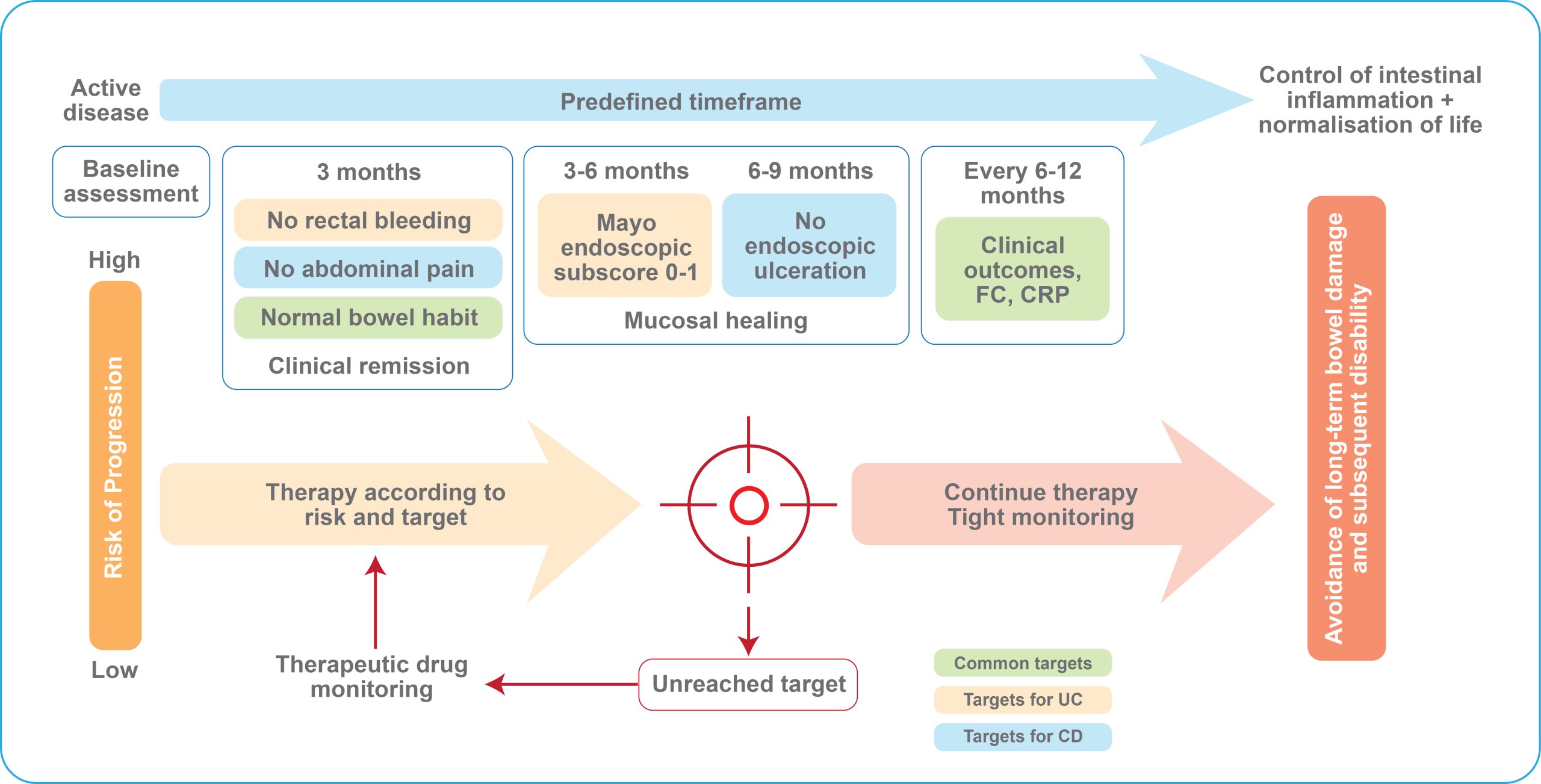
Figure 1. Treat-to-target strategy aims to control intestinal inflammation and normalise life in patients with CD and UC.
Readapted from Le Berre C, et al. Clin Gastroenterol Hepatol 2020.28
CD, Crohn’s disease; CRP, C-reactive protein; FC, faecal calprotectin; UC, ulcerative colitis.
Considerations for difficult-to-treat IBD
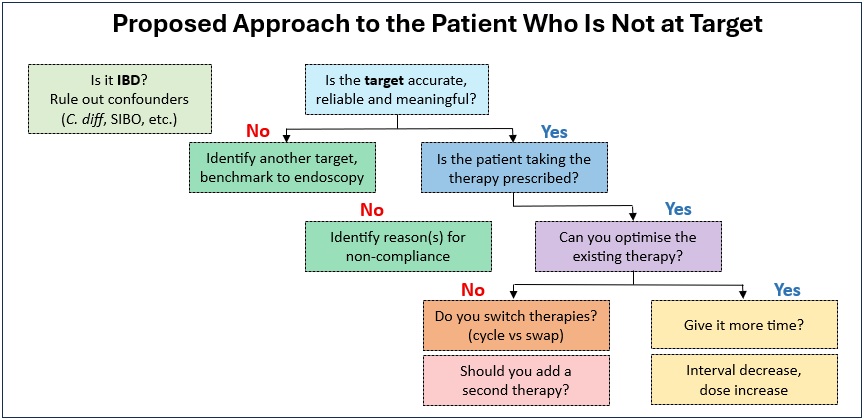
Figure 2. Treatment algorithm for patients with difficult-to-treat IBD.
C. diff, Clostridioides difficile infection; IBD, inflammatory bowel disease; SIBO, small intestinal bacterial overgrowth.
Managing patients with difficult-to-treat IBD requires a systematic and proactive approach (Figure 2).30 The first step is to determine whether non-response is due to a dosing issue or a mechanism failure. Clinicians should use objective measures (i.e., endoscopy or biomarkers) rather than solely relying on symptoms. Before escalating therapy, it is essential to rule out confounding factors like infections, strictures, misdiagnoses, drug intolerance (e.g., to 5-aminosalicylates) and non-adherence.31
To address non-response or loss of response, treatment can be optimised. For example, switching from subcutaneous to intravenous anti-TNF therapy may improve outcomes in some patients.32 Factors such as low albumin, male sex and high body mass index can also influence drug clearance and dosing needs.33 Additionally, case series from the University of Chicago have found that combination or dual-targeted therapies (i.e., pairing ustekinumab [interleukin-23 inhibitor] with upadacitinib [Janus kinase inhibitor]) achieved promising efficacy and safety profiles in adult and paediatric patients with refractory IBD.34,35
In conclusion, difficult-to-treat IBD requires a multifaceted approach, including clear communication and ongoing education between clinicians and patients, individualised treatment, timely access to care through frequent visits and proactive monitoring, and a multidisciplinary team comprising surgeons, dietitians, rheumatologists and psychologists, to ensure a comprehensive and patient-centred management.27,36
References:
1. Argollo M, et al. Lancet Gastroenterol Hepatol 2019;4:643-654.
2. Mitropoulou MA, et al. Cureus 2022;14:e28502.
3. Xu YH, et al. World J Gastroenterol 2022;28:6888-6899.
4. Revés J, et al. Curr Res Pharmacol Drug Discov 2021;2:100070.
5. Marsal J, et al. Front Med (Lausanne) 2022;9:897936.
6. Parigi T, et al. Lancet Gastroenterol Hepatol 2023;8:853-859.
7. GBD 2017 Inflammatory Bowel Disease Collaborators. Lancet Gastroenterol Hepatol 2020;5:17-30.
8. Pakdin M, et al. BMC Gastroenterol 2023;23:21.
9. Teruel C, et al. World J Gastrointest Pharmacol Ther 2016;7:78-90.
10. Centanni L, et al. Pharmaceuticals 2025;18:78.
11. Lichtenstein GR, et al. Am J Gastroenterol 2018;113:481-517.
12. Sandborn, WJ. Gastroenterology 2014;147:702-703.
13. Rubin DT, et al. Am J Gastroenterol 2019;114:384-413.
14. Dassopoulos T, et al. Gastroenterology 2015;149:238-245.
15. Jose FA, et al. J Pediatr Gastroenterol Nutr 2008;46:124-133.
16. Waljee AK, et al. PLoS One 2016;11:e0158017.
17. Amaro F, et al. Biomedicines 2020;8:458.
18. Szigethy E, et al. Clin Gastroenterol Hepatol 2017;15:986-997.
19. Nguyen GC, et al. Inflamm Bowel Dis 2009;15:726-33.
20. Rubin DT, et al. Inflamm Bowel Dis 2012;18:2225-2231.
21. Ben-Horin S, et al. Gastroenterology 2022;162:482-494.
22. Ponsioen C, et al. Lancet Gastroenterol Hepatol 2017;2:785-792.
23. Noor N, et al. Lancet Gastroenterol Hepatol 2024;9:415-427.
24. Schett G, et al. N Engl J Med 2021;385:628-639.
25. Neuendorf R, et al. J Psychosom Res 2016;87:70-80.
26. Karpin J, et al. Crohns Colitis 360 2021;3:otaa095.
27. Vieujean S, et al. Nat Rev Gastroenterol Hepatol 2025;22:371-394.
28. Le Berre C, et al. Clin Gastroenterol Hepatol 2020;18:14-23.
29. Turner D, et al. Gastroenterology 2021;160:1570-1583.
30. Caron B, et al. United European Gastroenterol J 2024;12:605-613.
31. Vernia F, et al. J Clin Med 2024;13:3993.
32. Calafat M, et al. Therap Adv Gastroenterol 2024;17:17562848231221713.
33. Deyhim T, et al. J Clin Med 2023;12:7132.
34. Miyatani Y, et al. Dig Dis Sci 2024;69:355-359.
35. Kellar A, et al. Dig Dis Sci 2024;69:1826-1833.
36. Rubin, DT. Difficult to Treat Inflammatory Bowel Disease. Presented at: 27th Joint Annual Scientific Meeting; 7 September 2025; Kowloon, HK.
Artificial intelligence in endoscopy – the future is now
 | Dr. Louis Ho-Shing LauAssistant Professor |
Despite advancements in endoscopic technology, studies report high miss rates for gastrointestinal (GI) cancers during index examinations, including 26% of adenomas, 9% of advanced adenomas and 6% of upper GI cancers.1,2 These diagnostic gaps contribute to post-colonoscopy colorectal cancer, which accounts for 12.1% of all colorectal cancer cases.3
Next-generation endoscopy can address the unmet need
Next-generation endoscopy integrates high-quality imaging, robotics and artificial intelligence (AI) to enhance current limitations. AI-assisted endoscopy is divided into two main categories: quality control and computer-aided tasks.
Quality control
Computer-aided quality control enhances procedural monitoring by automating landmark identification and tracking withdrawal speed to ensure examination completeness.4 In a prospective cohort study, Cerebro (an AI software jointly developed by CUHK and EndoVision Ltd) improved the completeness of upper GI endoscopies (oesophago-gastro-duodenoscopy; OGD) by over 20% and enhanced photo-documentation without prolonging inspection time.4 Results from a multicentre trial also demonstrated that high-quality OGD, as monitored by AI, is strongly correlated with early cancer detection rates (N=17,787; r=0.756; p=0.004).5
Computer-aided tasks
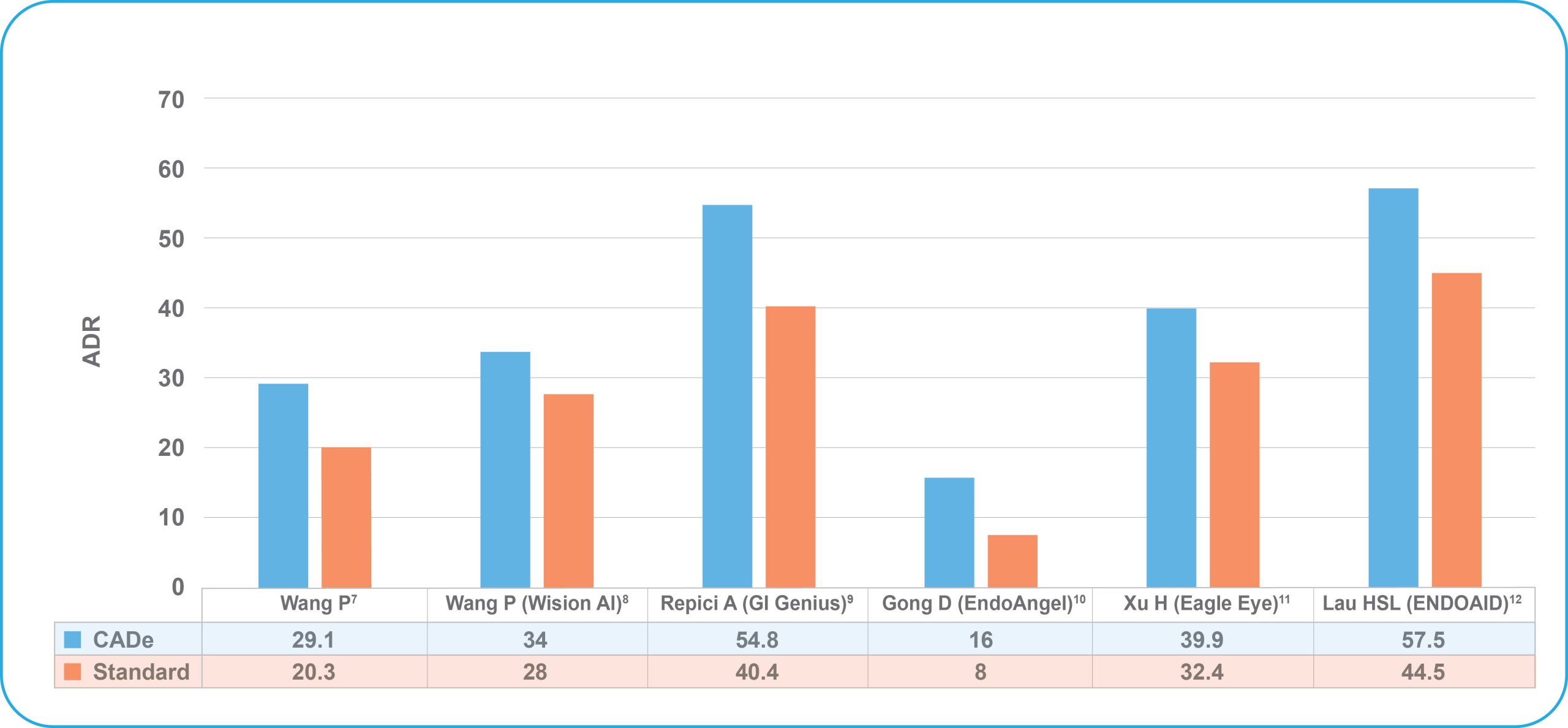 Figure. CADe significantly increases ADR in expert and junior endoscopists.
ADR, adenoma detection rate; CADe, computer-aided detection.
Computer-aided detection (CADe) can detect hidden polyps in real time, alerting the endoscopist to lesions that might otherwise be missed (i.e., behind folds). In a meta-analysis with over 40 randomised trials, the use of CADe showed higher adenoma detection rates (ADRs) compared with standard colonoscopy (ADR, 44.7% vs 36.7%; rate ratio, 1.21 [CI, 1.15–1.28]).6 In terms of expertise, CADe demonstrated a consistent increase in ADR among expert and junior endoscopists, using different AI software (Figure).7-12
Furthermore, a meta-analysis of 11 studies on computer-aided diagnosis (CADx) reported both potential benefits and risks.13 Results showed a reduced proportion of polyps undergoing unnecessary pathological assessment, indicating improved efficiency.13 However, it also highlighted a concerning proportion of incorrectly predicted polyps.13 These findings underscore the need for further research to validate the clinical utility and safety of AI-assisted diagnostic tools.
Clinicians should remain vigilant
Despite the promising evidence, many concerns about AI-assisted endoscopy exist:
Is it cost-effective? According to one of the World Endoscopy Organization position statements, AI-assisted endoscopy can increase short-term costs due to more polypectomies from enhanced detection.14 However, based on a modelling study, AI-assisted endoscopy can be cost-effective in the long run due to its potential to prevent colorectal cancer and reduce the need for expensive treatments (e.g., chemotherapy, surgery).15
Does it offer long-term protection? Although AI-assisted endoscopy has shown improvement in ADRs, it remains unclear if this translates to long-term protection against GI cancers; more prospective, longitudinal trials are needed. A CUHK-led study is currently underway to assess the long-term effectiveness of AI-assisted colonoscopies on adenoma recurrence.16
What about AI blind spots? AI systems can only detect visible lesions. If an endoscopist does not properly expose the mucosa, the CADe system may fail to identify any lesions present.17,18 Combining AI with mucosal exposure devices, such as ENDOCUFF VISION, can potentially mitigate this limitation and further boost detection.17-19
Can it deskill endoscopists? Over-reliance on AI may negatively impact clinician skills. One study has shown that endoscopists using AI tended to fixate on AI-generated alerts, potentially neglecting thorough mucosal inspection.20 Additionally, another study reported a decrease in ADR after the introduction of AI-assisted endoscopy programs.21 These raise concerns on competency and the implications for future training curriculum.
Beyond AI-assisted endoscopy: Future directions
Beyond diagnostics, AI-assisted endoscopy has shown potential therapeutic applications, supporting better and faster vessel detection during advanced procedures such as endoscopic submucosal dissection (ESD) and peroral endoscopic myotomy (POEM).22,23 Overall, future directions aim to seamlessly integrate AI, imaging and robotics to revolutionise endoscopic practice.
References:
1. Zhao S, et al. Gastroenterology 2019;156:1661-1674.
2. Januszewicz W, et al. Endoscopy 2022;54:653-660.
3. Cheung D, et al. Gastrointest Endosc 2016;84:287-295.
4. Chan SM, et al. Endosc Int Open 2025;13:a25476645.
5. Li YD, et al. Gastrointest Endosc 2022;95:1138-1146.
6. Soleymanjahi S, et al. Ann Intern Med 2024;177:1652-1663.
7. Wang P, et al. Gut 2019;68:1813-1819.
8. Wang P, et al. Lancet Gastroenterol Hepatol 2020;5:343-351.
9. Spadaccini M, et al. United European Gastroenterol J 2020;8:44-51.
10. Gong D, et al. Lancet Gastroenterol Hepatol 2020;5:352-361.
11. Xu H, et al. Clin Gastroenterol Hepatol 2023;21:337-346.
12. Lau HSL, et al. Clin Gastroenterol Hepatol 2023;22:630-641.
13. Hassan C, et al. Lancet Gastroenterol Hepatol 2024;9:1010-1019.
14. Mori Y, et al. Dig Endosc 2023;35:422-429.
15. Areia M, et al. Lancet Digit Health 2022;4:e436-e444.
16. Data on file. Study design of the ongoing “Longterm Effectiveness of Artificial Intelligence-assisted Colonoscopy on Adenoma Recurrence (ENDOAID-PRO)”. Sha Tin, HK: Prince of Wales Hospital, The Chinese University of Hong Kong.
17. Spadaccini M, et al. Gastroenterology 2023;165:244-251.
18. Lui TK, et al. Am J Gastroenterol 2024;119:1318-1325.
19. Data on file. Clinical study report on combining AI with an exposure device. Sha Tin, HK: Prince of Wales Hospital, The Chinese University of Hong Kong.
20. Troya J, et al. Endoscopy 2022;54:1009-1014.
21. Budzyń K, et al. Lancet Gastroenterol Hepatol 2025;10:896-903.
22. Scheppach MW, et al. Endoscopy 2025;57:760-766.
23. Ebigbo A, et al. Gut 2022;71:2388-2390.
Updates in management of gastric outlet obstruction
 | Professor Anthony Yuen-Bun TeohHonorary Consultant Surgeon |
For the management of unresectable malignant gastric outlet obstruction (GOO), clinicians may consider three palliative methods: duodenal stenting, surgical bypass and the novel endoscopic ultrasound-guided gastroenterostomy (EUS-GE). Each method has both advantages and disadvantages; treatment selection depends on patient factors (e.g., frailty, life expectancy), tumour characteristics and institutional expertise (Table 1).1-4
Table 1. Comparison of palliative methods for malignant GOO, featuring the recent advancement EUS-GE.1-4
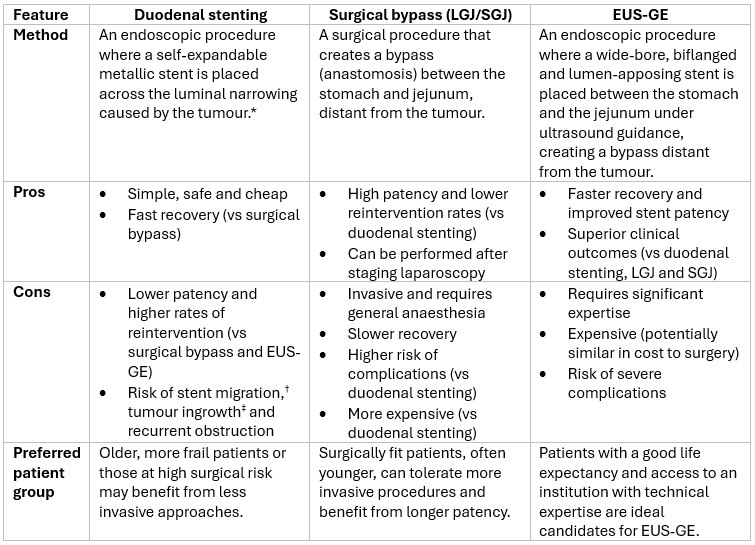
EUS-GE, endoscopic ultrasound-guided gastroenterostomy; LGJ, laparoscopic gastrojejunostomy; SGJ, surgical gastrojejunostomy; vs, versus.
*Stents can be uncovered or partially covered. †In covered stents.4 ‡In uncovered stents.4
A promising alternative to traditional methods
EUS-GE has emerged as an attractive non-surgical option that combines the benefits of duodenal stenting and surgical bypass. However, this can be expensive and can carry a risk of severe complications (i.e., if the stent is misdeployed).4,5 This is also a highly advanced procedure with a steep learning curve, requiring significant expertise: An endoscopist requires about 25 cases to achieve proficiency and about 40 cases to reach mastery.6
Clinical evidence and guidelines support EUS-GE
Recent comparative trials (DRA-GOO, ENDURO and GOOSE) have shown that EUS-GE demonstrates superior outcomes compared with traditional palliative methods, reporting higher clinical success rates, shorter time to oral intake and hospital stay, reduced stent obstruction, lower reintervention rates and fewer serious adverse events (Table 2).7-9
Table 2. Clinical trials comparing EUS-GE with traditional palliative methods.
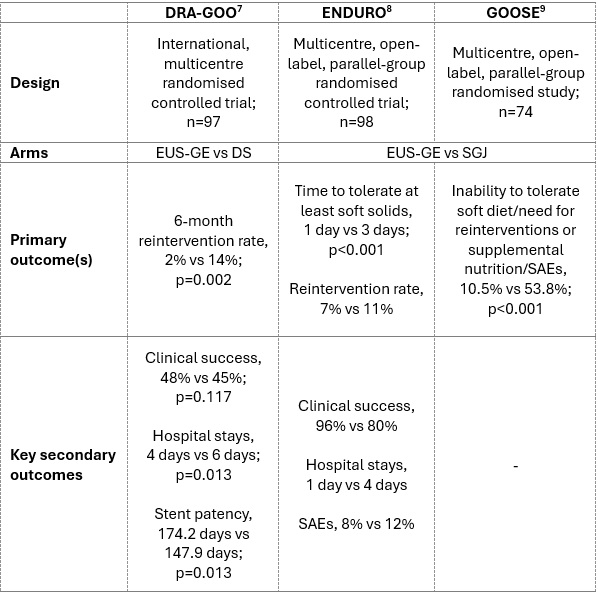
DS, duodenal stenting; EUS-GE, endoscopic ultrasound-guided gastroenterostomy; SAE, serious adverse events; SGJ, surgical gastrojejunostomy.
Subsequently, the European Society of Gastrointestinal Endoscopy published guidelines recommending EUS-GE as a preferred alternative to duodenal stenting and surgical bypass.10
Current techniques for EUS-GE
Device assisted10
- EUS-guided double-balloon–occluded gastrojejunostomy bypass
- Through-the-scope double-balloon device (e.g., DUBX™, Naja™)
- Kochin (Zacharia) double balloon
Freehand10
- Antegrade gastroenterostomy (GE): water irrigation method
- Antegrade GE: CRE™ balloon method
- Antegrade GE: wire trapping method
- Retrograde GE: enterogastrostomy
Although both device-assisted and freehand techniques are currently used, the optimal approach for EUS-GE continues to evolve. Nevertheless, EUS-GE offers significantly better outcomes than traditional palliative methods.7-9 In summary, when institutional expertise is available and patients have a good life expectancy, EUS-GE stands as the preferred palliative option for unresectable malignant GOO.11
References:
1. Tran KV, et al. Endoscopy 2024;56:780-789.
2. Fugazza A, et al. Medicina (Kaunas) 2024;60:638.
3. Manuel-Vázquez A, et al. World J Gastroenterol 2018;24:1978-1988.
4. Teoh AY, et al. Dig Endosc 2024;36:428-436.
5. Yamao K, et al. Gut 2021;70:1244-1252.
6. Jovani M, et al. Gastrointest Endosc 2021;93:1088-1093.
7. Teoh AY, et al. Lancet Gastroenterol Hepatol 2025;10:e8-e16.
8. Kastelijn JB, et al. Trials 2023;24:608.
9. Bang JY, et al. Gut 2025 September 24. doi:10.1136/gutjnl-2025-336339. [Epub ahead of print]
10. Teoh, AY. Update in management of malignant gastric outlet obstruction. Presented at: 27th Joint Annual Scientific Meeting; 7 September 2025; Kowloon, HK.
11. van der Merwe SW, et al. Endoscopy 2022;54:185-205.
45th Annual General Meeting cum Scientific Meeting of The Hong Kong Society of Gastroenterology
Date: 26 March 2026
Venue: Cordis, Hong Kong at Langham Place, Kowloon
Organizing Chairperson: Dr. Edmund Wu
The annual scientific meeting was a successful one attended by 135 healthcare professionals. The honorary fellowship of our Society was bestowed upon distinguished guest, Professor Chengwei Tang, President of the Chinese Society of Gastroenterology and Academic Chief of Department of Gastroenterology, West China Hospital, Sichuan University, Chengdu, China. Professor Tang is among the 29 honorary fellows of our Society who are renowned scholars in the specialty.
Professor Tang delivered an enlightening lecture on “A New Paradigm in the Management of Pancreatic Diseases” and joined a panel discussion with Professor Grace L.H. Wong and Dr. Henry H.W. Liu in a case on “Fibrocystic liver disease” presented by Dr. Cheryl W.T. Ip. Delegates participated actively throughout the discussion.
The annual general meeting then followed was attended by 78 fellows and members during which the Society’s annual report and financial statements for the year of 2025 were presented. Seven fellows were elected to the Council for the term of 2026-2028.
A Certificate of Appreciation was presented to each of the nine sponsors in appreciation of their support and contributions towards the Meeting and they were AstraZeneca, DCH Auriga, Ferring, Fresenius Kabi, Gilead, Johnson & Johnson, A.Menarini, Otsuka and Takeda.
Most participants stayed for the dinner and continued exchanging their views.


Honorary Fellow
| Professor Chengwei TangAcademic Chief |